Tuesday, February 03, 2015

Class Notes 3

Intro to Beyond Basic Genealogy

1. You didn’t need to sign up for this class because it’s all on the Internet. T or F

2. Genetic testing brings families together. T or F
<http://www.vox.com/2014/9/9/6107039/23andme-ancestry-dna-testing>

3. All I need to find stuff on the Internet is the search engine, “GOOGLE”. T or F
--------------------------------------------------------------------------------------------------------------------
The groundwork for building a family tree-house is all about obtaining vital event information for your ancestor.

The first step by which you may identify your ancestor is his or her correct name.

Given name = First Name + Middle Name.
What’s in a Sur-Name?
A Rose by any other name?
Would Smell as Sweet?


Articles about this topic: Kimberly Powell is a well-known and dependable authority whose links can help you find articles. She was a blogger before we knew what bloggers were! About.com hosts her forum:

Another well-known source is Cyndi Howells: ; use search box at top right of page or search under categories.
---------------------------------------------------------------------------------------------------------------------
Second Step in establishing the correct identity for your ancestor is obtaining the date and place for his vital life events (BMD's). Again, be as accurate as you can be. The experienced genealogist will tell you that this step becomes more important as times go on and that revision is frequently necessary.

Third Step: Relationships are KEY! Was your grandfather the oldest child in his family? Or the youngest? Did he have more than one wife? Who were his siblings? Where did his mother and father come from? Who lived next door? Who did he hang around with? A favorite cousin?

Other identifiers might include: nationality, ethnicity, heritage, culture, occupation, military service, education, religion, appearance, health factors, and residences.

What about BMD's?


More notes from Class

Sometimes, I jot down random things to bring up in class and then, I forget whether I employed them, printed them out as a handout, or the notes were for my own preparation.  Here is an example of something I think I sent to class members via my Gmail. 

Ta-Dum:
Option # 1 (preferred): Acquire a genealogy software program (see links below); the program will generate reports/forms, if desired, either blank, or after you have entered the data.

Option #2: Print forms off from the Internet or from a book. Look at the links below for links to free, printable forms.

I utilize paper forms to send info to folks who don't utilize the computer and also, I use them as worksheets.

Organization of Paper Records:
1. Use folders
2. Use notebooks

Arrange your materials by family group OR arrange alphabetically OR by type of record. For example, you might want to keep all census records together in the person's folder, all death certificates together, etc. Or, arrangement of documents could be in “time” order. Birth certificate first, marriage, second and so forth. The web links below, probably say it better than I do.

Original documentation such as your mother's birth certificate (handed down or certified) should be kept in a protective plastic sheet holder or in a box for archival purposes; scan all original documents.

Use CD's, Flash Drives (aka “memory sticks”, etc.), the “Cloud”, external hard drives, etc. for back-up. You can also “back-up” your genealogy by sending copies to


I would begin, if this is the direction you want to go, by using folders for each family group, then when you have collected several items, you can either create a notebook for each family group or just keep using folders, whichever, you choose. Another option, one used by a professional genealogist with whom I converse, is to arrange your names in alphabetical order. There's a little more to it than that, but I will send you some web links on that topic. For example, you can order the items in a folder or notebook by the type of record (census in one place, death certificates in a separate location, etc) OR, you can order the docs in order of the person and then the date

Notes from my class, "Beyond Basic Genealogy" (First Week)

Class Discussions:

    Will focus on relevant challenges for the genealogist/family historian.
      • Genealogy methodology, (basic principles), as it applies to 21st Century research.
      • Technology-- software developments that provide a platform for record keeping and/or manipulation of data.
      • Digital preservation of records---
        • How are records obtained?
        • How are records collections prepared for access by the genealogy community?
      • The Genealogical Society and other groups (historical, etc): How do they function best for the 21st Century family historian.
        • What kind of structure and support should a genealogy society provide?
      • Systems for Family Historians: goals, plans, principles, attitudes, objectives, etc.
      • What is your learning curve?
        • Genealogical education meets the “Real” Genealogist.
        • What skills are needed for ancestral hunting (research)
        • What tools are available to assist in growing a family tree?

Will be courteous, respectful, and thoughtful.
  • Because of time constraints, it will not be possible to discuss each and everyone's personal brick wall challenge. Here is what I hope is a satisfactory approach:
    • You may e-mail me anytime to discuss obstacles you are facing or after you have tried to evaluate your situation, you can e-mail me to see if I have other suggestions.
    • You may make an appointment with me to meet with you at the local LDS Family History Center, (a community outreach), either during my regular shift or at some other time that I'm available.
    • I do like to do case studies a few times during the session. To get your particular case study on my teaching schedule, please turn in a pedigree chart and family group sheets for one of your family lines. Circle or indicate with a note the person or generation where you have run into a brick wall. We will then discuss this case as a class and make suggestions.
    • Right now, I have some time constraints for the class period. I will be leaving class at 12:30p.m., sharp, for a couple of weeks. Normally, I would be glad to stay after class and discuss with you personally, any questions you may have, but for the next few weeks, I may not be able to accomplish that.
  • How many of you are interested in learning to set up blog?
  • What other ways can you share your genealogy journey with your family and possible collaborators.

Monday, February 02, 2015

52 Questions in 52 Weeks

52 Questions in 52 Weeks

This is an excellent exercise for writing your personal history.  You only have to make up the last four weeks (January) and you will be ready to begin the February weeks.  Encourage others in your family to do this activity and then, later you can compare!  My brother and I often have a different recall of events that happened when we were children!

You will also have, at the end of the year, a good start to writing your personal history.

Announcing the Eight Semifinalists for the $25,000 RootsTech Innovator Challenge

Announcing the Eight Semifinalists for the $25,000 RootsTech Innovator Challenge

As I read the list of semifinalists and the description of their entries, I almost shivered with delight.   What vision and far thinking each of the semifinalists have!  I saw several that captivated my attention:

  • Argus Search:  Didn't even realize it was possible to develop a search engine for old handwriting!
  • HistoryLines.com: Can't wait for this technology; it should lead to more possible avenues for research.
Okay, Okay, I'm not a techno-phobe; my understanding of the descriptions in this article may be a little off, but I seriously love living in this age of technology; it brings the genealogist in me to tears of happiness!  Technology will never work for us, however, when we do shoddy research, so our job is clear cut: bring our best game to match with others' best techno innovation and voila, we have trees sprouting everywhere!

Saturday, January 31, 2015

Family Tree Maker: The Family Stories to Save for Future Generations

Family Tree Maker: The Family Stories to Save for Future Generations

Encourage your children and grandchildren to tell stories about their family life.  This would be planting the seed, I believe, for remembering and sharing stories later on.

I have been telling stories to my 19 year old grandson.  I don't know if, in his busy and already crowded brain, he will retain them, but the fact that he listens politely helps me share the stories and someday, down the line, he will remember something, maybe.

Humans and Neandertals likely interbred in Middle East | Science/AAAS | News

Humans and Neandertals likely interbred in Middle East | Science/AAAS | News

It's that whole genome thing, again!  

Ancient human jawbone surfaces off coast of Taiwan | Science/AAAS | News

Ancient human jawbone surfaces off coast of Taiwan | Science/AAAS | News

Is this your ancestor?

Tuesday, January 27, 2015

Ancestors Season 2: Probate Records | FamilySearch.org

Ancestors Season 2: Probate Records | FamilySearch.org

Now, this is just a sample of what types of online lessons and tutorials can be found at FamilySearch.  

Learning Center: Genealogy Courses | FamilySearch.org

Learning Center: Genealogy Courses | FamilySearch.org

Here's a list worth looking at: online courses in almost anything genealogy you could want to learn about! 

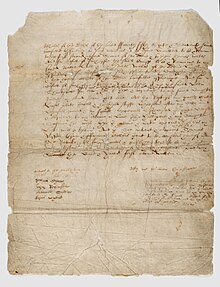
Script Tutorials - Paleography

Script Tutorials - Paleography 
Wikipedia Info:http://en.wikipedia.org/wiki/Palaeography

 Are you wondering why you're stuck in your genealogy? 

If you haven't tried to access some of the old handwritten records because you can't read them, maybe this site will help.  Reading old wills shouldn't hang you up and once you begin to learn  a few key elements about this topic, you will only get better at it. 

Saturday, January 24, 2015

How are genealogists similar to astronauts?

1.  We are tied/tethered to our ancestors and TO OUR COMPUTERS! 

We are dependent on others for providing guidance, information, feedback, and keeping us grounded!

Genealogists are often, like the astronauts, explorers and trail blazers, treading where others fear to go.  

Can you find a parallel between genealogists and anteaters?  Let me
hear from you!

The Sinking of the SS Sultana - Newspaper and Current Periodical Reading Room (Serial and Government Publications Division, Library of Congress)

The Sinking of the SS Sultana - Newspaper and Current Periodical Reading Room (Serial and Government Publications Division, Library of Congress)

Subscribe to have this type of highlight in history sent straight to your e-mail from the Library of Congress.

Indiana Genealogical Society Blog: Proposed Elimination of Genealogy at the Indiana State Library

Indiana Genealogical Society Blog: Proposed Elimination of Genealogy at the Indiana State Library

This is an awful piece of news to wake up to this Saturday morning.  I would strongly suggest everyone with an interest in Indiana history send a snail mail and $5 as a way to protest this proposal!

SMS Text Simplifies FamilySearch Account Access

SMS Text Simplifies FamilySearch Account Access

People who register via their cell phones don't even have to have an e-mail account.

Friday, January 23, 2015

Physicists read scrolls scorched by ancient volcano | Science/AAAS | News

Physicists read scrolls scorched by ancient volcano | Science/AAAS | News

I was just relaying information to my Genealogy class today about records being discovered all the time and even that records which were damaged might be candidates for restoration through new technology!

When I was Young! Tennis Interview

  I may have been a little bit precocious at the age of 15 or 16.  But I didn't let that stop me!   While Northwest Florida might have b...